

Small Lines, Big Ideas: How Fineliner Pens Inspire Creativity in Journals
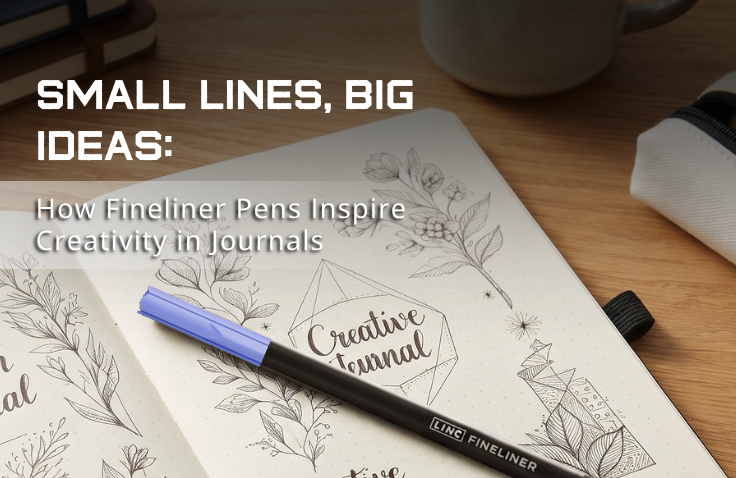
Open a well-used journal, and you’ll notice something interesting. The pages that feel alive usually aren’t the ones with big, dramatic drawings. They’re the ones with tiny details: a wobbly border, a shaded corner, handwriting that changed mood halfway down the page. That’s exactly where a fineliner pen earns its spot on the desk. Linc brings this idea into everyday stationery, with fineliners that make it easier to add small details to any notebook.
Why a Fineliner Pen Belongs on Every Journal Desk?
Think about the last time you tried to doodle with a thick marker. The lines looked heavy, the letters lost their shape, and the little details became harder to draw. A fineliner pen works the other way around. Its slim tip stays steady, so small writing stays readable and delicate sketches keep their shape.
Journaling is mostly about showing up on tired days. When the tool feels easy, you show up more often. That’s the real strength of a good fineliner pen. It lowers the pressure. You don’t have to be an artist; you just need a line that behaves. That same ease of writing also makes a fineliner worth considering when looking for the best pens for students. Linc designs its pens with that kind of comfort in mind, so the tool fades into the background and your thoughts stay on the page.
What a Fineliner Pen Can Do for Your Pages?
Ever flipped through an old planner and wished you’d added a little more flair? Small touches change how a page reads. With a fineliner pen, even a plain weekly spread starts to feel personal. Here are a few easy ways to use it:
- Crisp headings that stand apart from body notes, no ruler needed
- Tiny margin doodles like stars, leaves, coffee cups, and little faces
- Hatching and cross-hatching for shadows that add depth
- Tidy mood trackers and habit grids that stay readable
- Hand-lettered quotes with clean, even strokes
Each of these takes a few quiet minutes, and none needs special skill. Together, these little additions make a notebook feel more personal and enjoyable to revisit. A fineliner also makes a useful addition to everyday school stationery.
Adding Color to Your Fineliner Journal Pages
Black lines look sharp, but some pages want a little warmth. Anyone who’s tried coloring inside their own outlines knows the feeling. This is where a color brush pen comes in handy. Outline your drawing with a fineliner pen, then add soft colour with a color brush pen. Together, they bring out the details without making the page look crowded.
Many people who enjoy journaling keep both tools in the same pencil case for this reason. The fineliner handles structure, while the brush tip handles mood. Linc brings these writing and colouring options together, giving you room to experiment with different styles on the same page.
A Smart Pick for Classrooms and Study Notes
Walk into any classroom and you’ll spot the same thing: notes with highlights, neat boxes and little arrows linking ideas. Adding small drawings and visual details to notes can make revision more engaging, and a fine tip makes these additions easier. For parents choosing the best pen for students, reliability, comfort and an affordable price often matter most. A fineliner ticks most of those boxes.
Teachers appreciate tidy handwriting, and students enjoy a bit of fun. A fineliner gives both. It’s great for mind maps, labeled diagrams, and quick revision sheets. A few fineliners alongside pencils and highlighters can make a useful addition to any school stationery kit. Here’s what students tend to look for:
- Smooth flow that doesn’t skip during long notes
- A comfortable grip for a full day of writing
- Ink that dries quickly, so left-handers avoid smudges
- A sturdy tip that survives a crowded school bag
- Colors that make revision notes easier to scan
Linc keeps these everyday needs in view when shaping its pens, which makes its fineliners easy to recommend for school bags.
Choosing the Right Fineliner With Linc
Choosing a pen often comes down to what feels right in your hand. Some people want a whisper-thin line, while others like something slightly bolder. The easiest way to decide is to test a few and notice how each pen feels in your hand. With Linc, you can explore writing and drawing tools together, pairing a fineliner pen with a color brush pen to find a combination that matches your style.
If you are buying pens for school, consider what makes the best pen for students in your family. Someone who writes a lot needs comfort above all, while someone who sketches might care more about line variety. Either way, keep a spare in your bag have a funny habit of vanishing right before exams.
A quick tip for beginners: practice on a spare page before committing to your journal. Test light and heavy pressure, draw circles, and write your name in small letters. Your hand will pick up the rhythm quickly, and soon those little lines will feel automatic.
Conclusion
A good journal doesn’t need expensive supplies or perfect handwriting. It needs tools that make you want to keep going. A fineliner pen gives you steady, delicate lines for headings, doodles, planners, and study notes, while a bit of color adds warmth when a page needs it. For classrooms, it fits naturally into everyday routines, and many parents searching for the best pens for students end up choosing it for its comfort and control.
Linc brings these qualities together through pens that feel easy to pick up and enjoyable to use, whether you’re writing, sketching, or revising. So grab a notebook and a Linc fineliner, test a few lines, and let small strokes lead to bigger ideas. Your next favorite page might be just a doodle away.
Tags:
Share
Latest Posts
Reach Us