

From Pens to Paper Clips: How a Desk Organiser for Office Keeps Stationery Sorted
Open any desk drawer at random, and you'll probably find the same thing — pens that no longer work, three half-used sticky note pads, and paper clips hiding in places they have no business being. It's not that anyone plans for this.
It just happens, one loose item at a time, until the desk stops feeling like a workspace and starts feeling like a search-and-rescue mission. This is exactly where a Desk Organiser for Office earns its place — not as an extra accessory, but as the thing that quietly keeps everything else in check.
At Linc, we know this kind of everyday desk chaos well. A good Desk Organiser for Office simply makes the things you use most easier to find, without turning your workspace into a perfectly arranged display.
Why a Desk Organiser for Office Makes Work Easier?
Think about how many times a day you reach for something small — a pen, a clip, a highlighter. Now think about how often you actually had to look for it. That gap is where a desk organiser helps. Frequently used stationery stays within arm's reach, so there's less time spent digging through drawers for one paper clip.
The bigger benefit is consistency. When pens, notes and clips have a regular place, the desk is easier to use from one day to the next. A few seconds saved every time you reach for something can add up during a busy workday — a simple idea that guides Linc's approach to everyday desk products.
What Can You Keep in a Desk Organiser for Office?
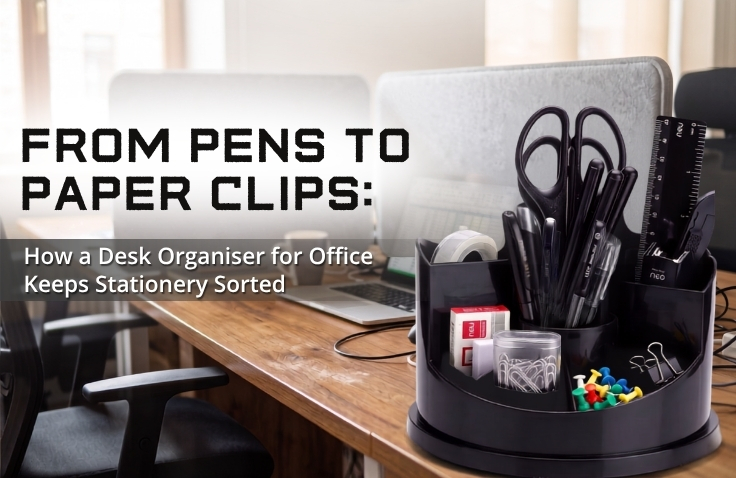
A Desk Organiser for Office is only as useful as what you put in it, and where. Most desks end up holding the same core items:
● Pens, pencils, markers, highlighters, and other writing tools
● Paper clips, binder clips, sticky notes, erasers, and sharpeners
● Scissors, rulers, staplers, and other office stationery items that tend to get lost in drawers
Let different compartments do different jobs — pens where you can reach them easily, clips somewhere shallow so they don't get buried, and less-used items towards the back. This is particularly useful with a Linc desk organiser, where keeping frequently used stationery separate makes the whole setup easier to manage. The setup sounds obvious, but organising stationery this way can make a surprisingly noticeable difference to how quickly you find things
Desk Accessories That Work Well Together
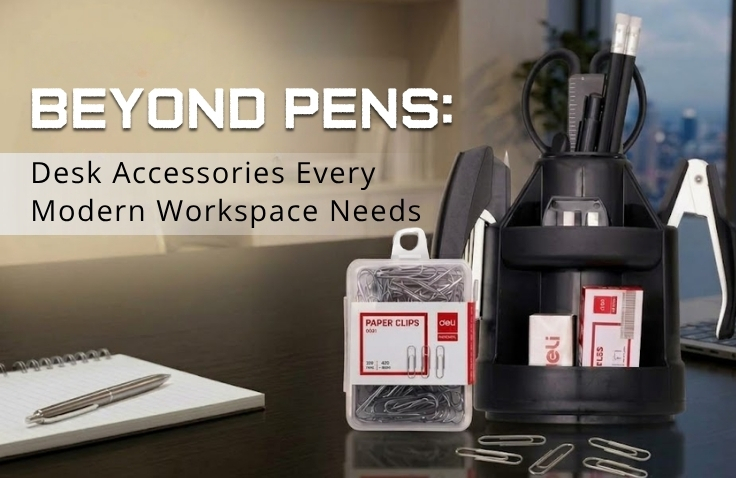
A desk organiser doesn't have to do everything on its own. The right desk accessories can take care of the items that don't fit neatly into its compartments — a document tray for papers, a pen holder for frequently used writing tools, or a cable organiser for the wires that tend to spread across the desk.
The idea is simple: each accessory should have a purpose rather than adding to the clutter. A Linc desk setup can follow the same principle, with the organiser handling smaller stationery while trays, holders and other accessories take care of everything else that needs a place
How to Arrange a Desk Organiser for Office
The easiest way to arrange one is to think about how often you use each item. Keep your everyday pen, pencil or highlighter in the easiest-to-reach section. Paper clips, erasers and sticky notes can take up smaller compartments, while spare markers or less-used tools can stay towards the back. That way, the organiser follows your routine instead of making you change it.
Once everything has a place, you stop thinking about where things go. You just reach for them — the whole point of a Linc desk setup.
How an Office Organizer Helps During a Busy Workday
On a slow day, a messy desk is mildly annoying. On a busy one, it can cost real time. An office organizer helps cut down on the searching and shuffling that quietly breaks your concentration, especially when several office stationery items are in regular use.
This becomes even more useful in shared workspaces, where pens, clips and other small supplies can easily end up somewhere they don't belong. A clear, organised setup makes it easier for everyone to find what they need and put it back afterwards.
Choosing the Right Desk Organiser for Office
Not every Desk Organiser for Office suits every desk, and that's fine — it depends on how you actually work:
● How much desk space you have to spare, and the number and size of compartments you'll realistically use
● The stationery type you reach for most, plus ease of access and stability so it doesn't tip or shift
Bigger isn't automatically better. A large organiser with compartments you never use just becomes clutter with better branding. Linc keeps that practical side of desk organisation in mind, so the organiser can be useful without taking over the workspace.
Simple Habits to Keep Your Desk Organised
Even the best Desk Organiser for Office needs a little upkeep:
● Put items back after using them, and keep similar stationery grouped together
● Clear out things you haven't touched in months, and refill daily-use stationery before it runs out
Small on their own, but together they're what keeps a desk organised past the first week — and what makes a Linc organiser worth the initial setup.
Conclusion
A Desk Organiser for Office doesn't solve a complicated problem. It simply gives everyday stationery a place to go — from the pen you use all day to the paper clips that somehow disappear into every drawer.
Combine a good organiser with useful desk accessories and a few simple habits, and the workspace becomes easier to manage. Pens, notes, clips and other office stationery items stay within reach instead of becoming another thing you have to search for.
That's the idea behind Linc's approach to everyday desk organisation. It isn't about creating an empty, perfectly arranged desk. It's about knowing where things are and making the desk work the way you actually do.
Tags:
Share
Latest Posts


Reach Us